Enter the password to continue.
Firefighters' equipment checks were still happening on a whiteboard, with a single officer as the only line of compliance. This proof of concept, built with SCDF's own operations team, turned that into an automated checklist and a live command-centre dashboard.
The Singapore Civil Defence Force is Singapore's emergency service under the Ministry of Home Affairs, responsible for firefighting, technical rescue, emergency medical services and national civil defence coordination. SCDF was looking to improve productivity and efficiency in its mission-critical processes, starting with Personal Protective Equipment (PPE) inspection before firefighters are deployed to a scene.
PPE inspection is essential, but it was time-consuming, repetitive, and prone to human error. Documentation happened manually on a whiteboard, with no proper archiving and only a single layer of compliance check standing between a firefighter and deployment.
Transformation. We visited SCDF's site to understand the current process firsthand, identify pain points, and brainstorm potential solutions with the team on the ground. The proposal that came out of it had two parts: a digitised, just-in-time PPE check, and a real-time AI dashboard for the command centre.
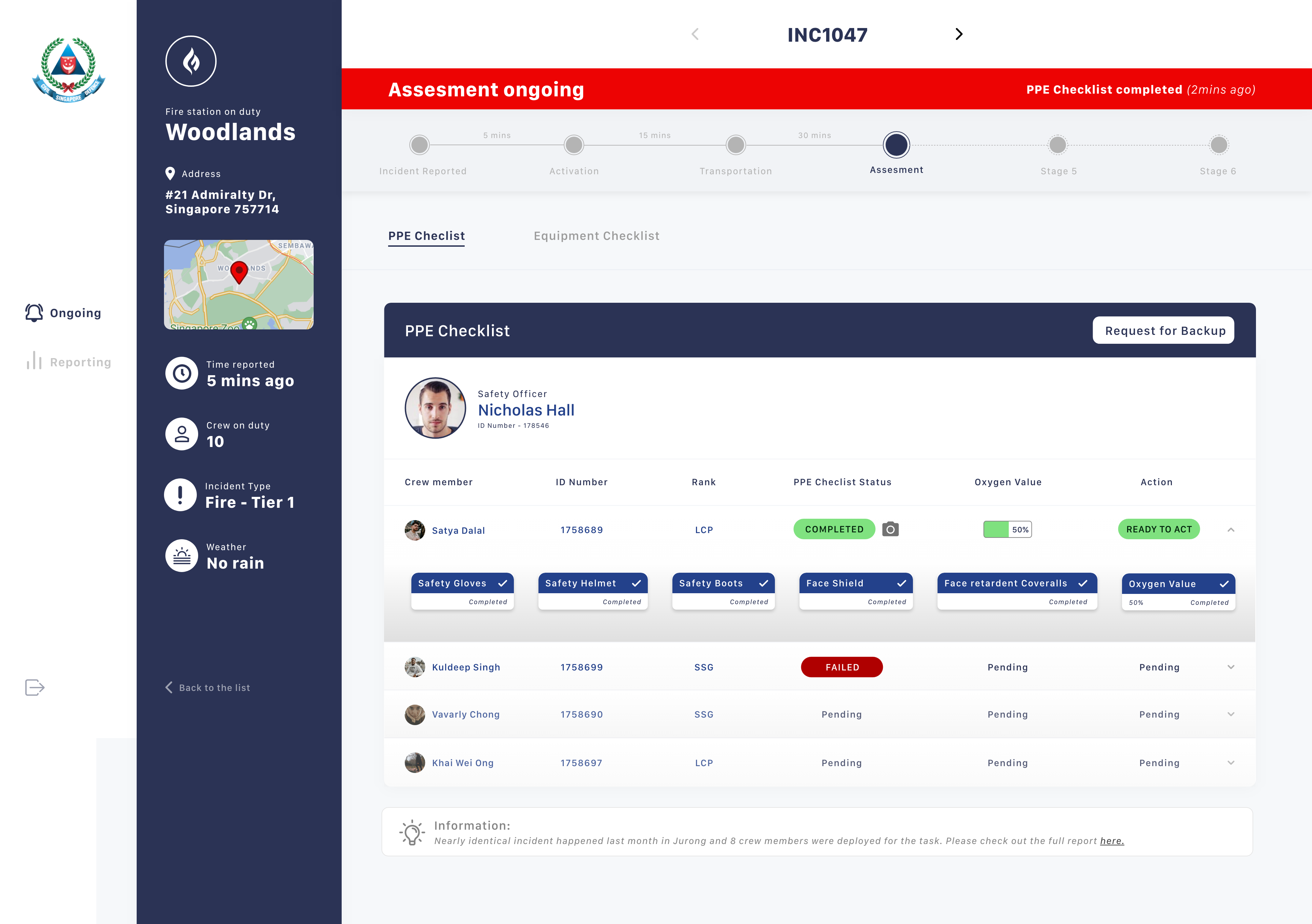
Results. Working with the IBM IMS and Technology Garage team, we built an intelligent solution that automates and digitises the PPE inspection process, able to handle both unstructured and structured data, and surface insightful recommendations especially during time-sensitive missions.
UX & interaction designer
Built interactive prototypes for the interface, defined use cases and wireframes, and ran usability studies, gathering feedback through user interviews.
Visual designer
Translated requirements into style guides, graphics assets, icons, design patterns and pixel-perfect user interfaces.
Pain points
No real-time tracking of incidents across views and personnel. Learnings from rescue operations went unprocessed, sitting archived rather than acted on.
Future state
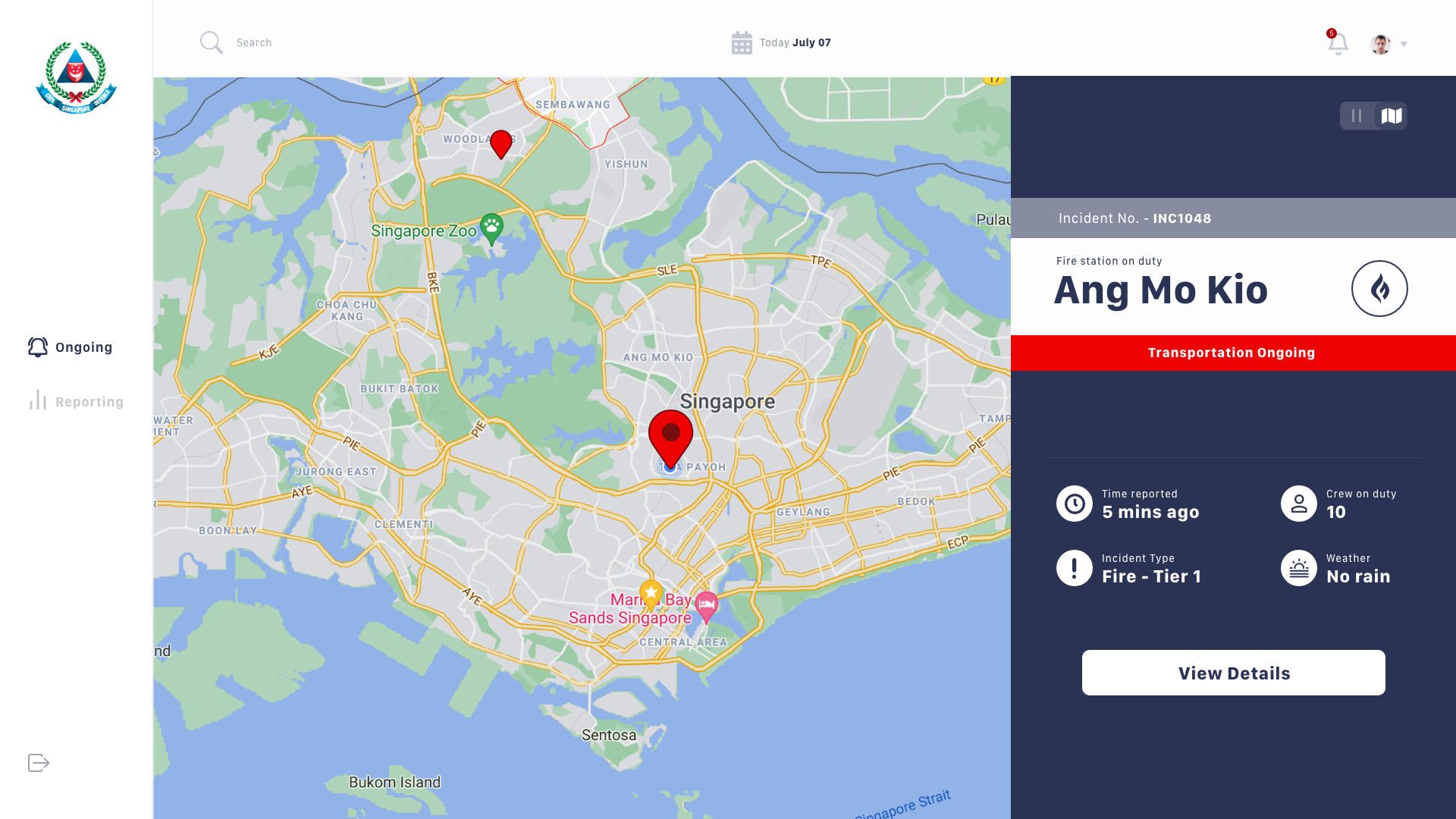
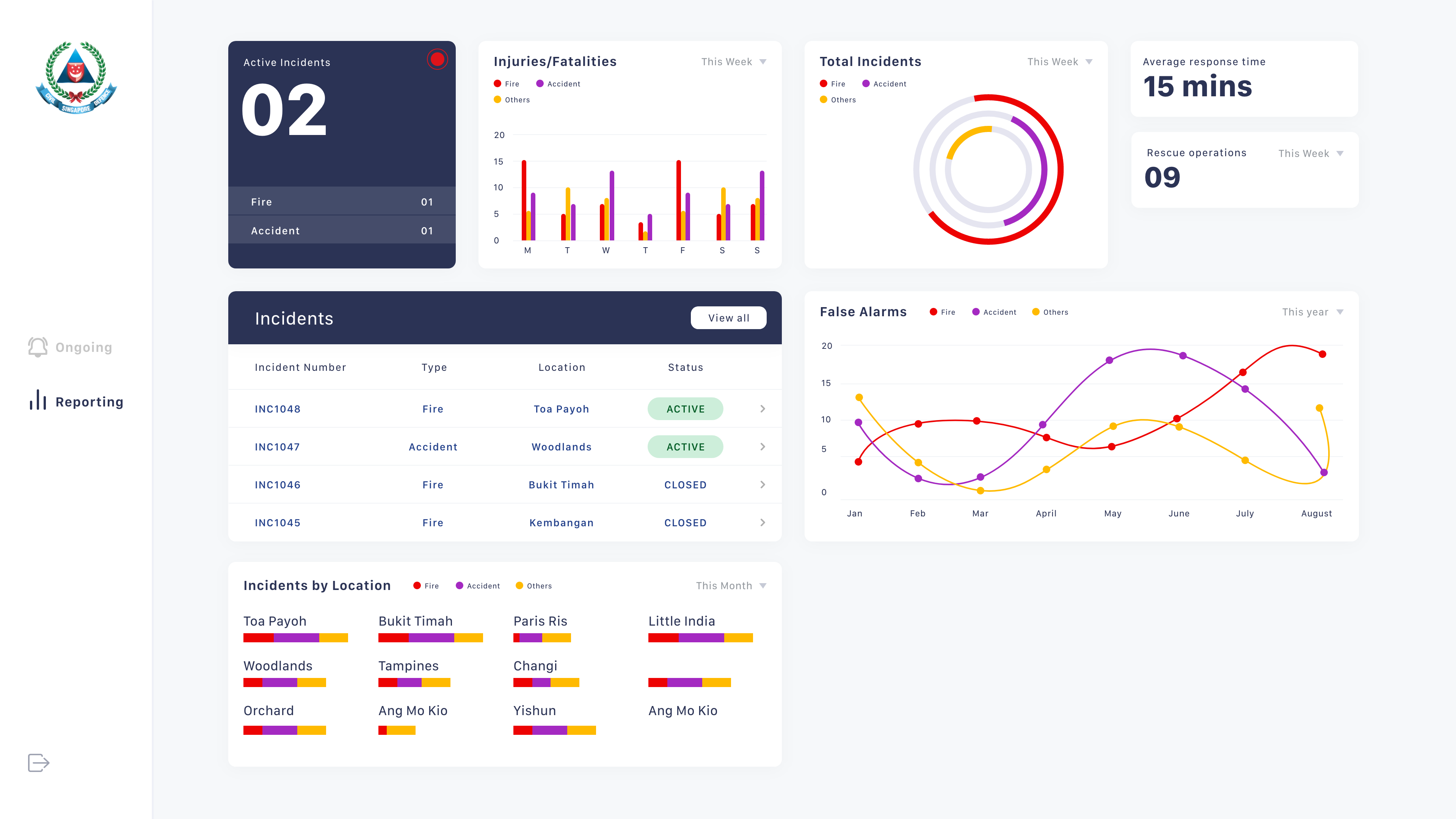
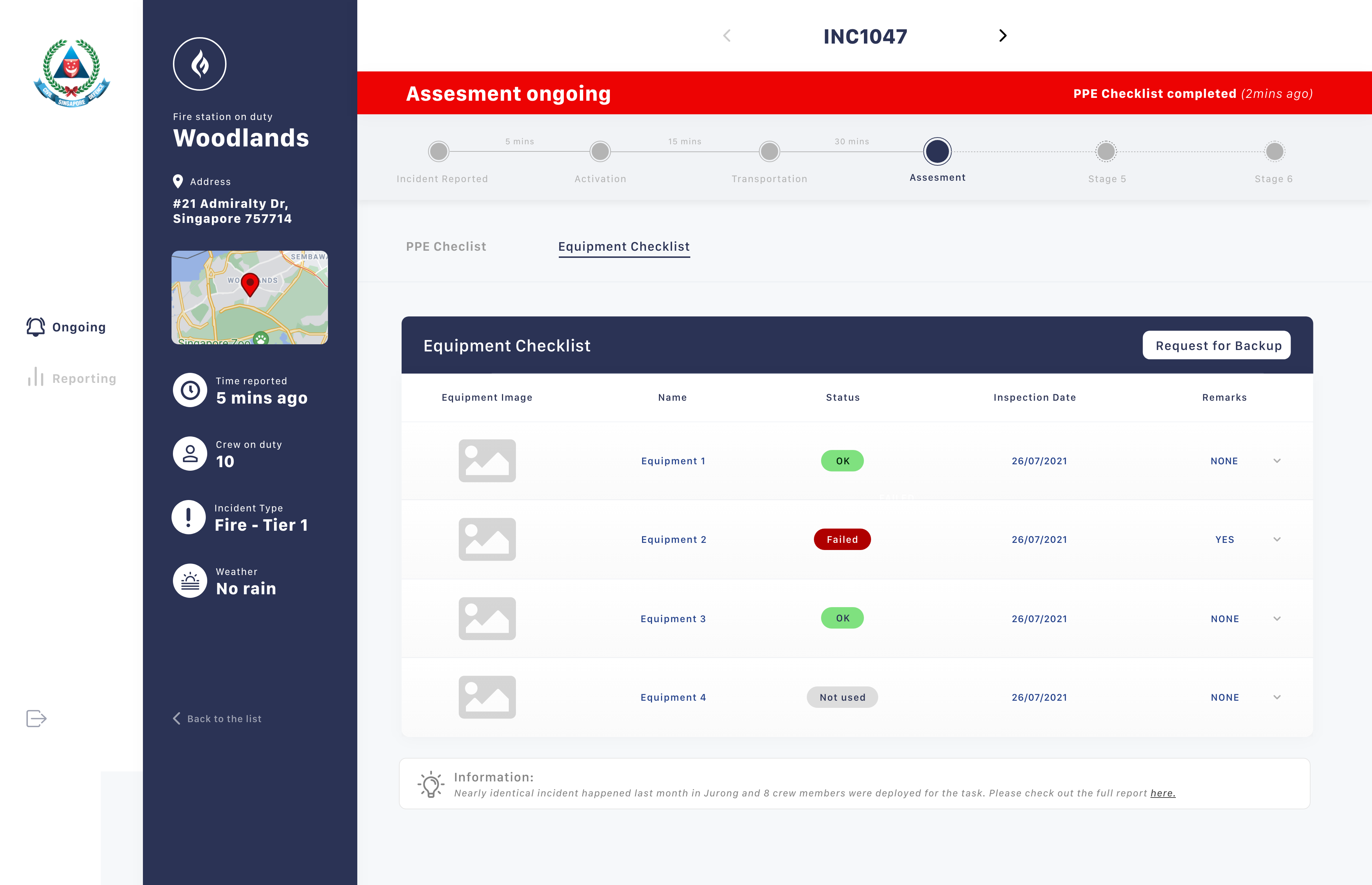
A real-time live tracker of every incident in progress, with AI analytics proactively recognising abnormal patterns and behaviours.
Outcome
Faster speed to rescue, faster decisions at the command centre, earlier anomaly detection, and raw data turned into insight for compliance, process and training.
Pain points
Information flowed to the Command Centre through disconnected channels. Documentation was written and visual, with no photographic evidence.
Future state
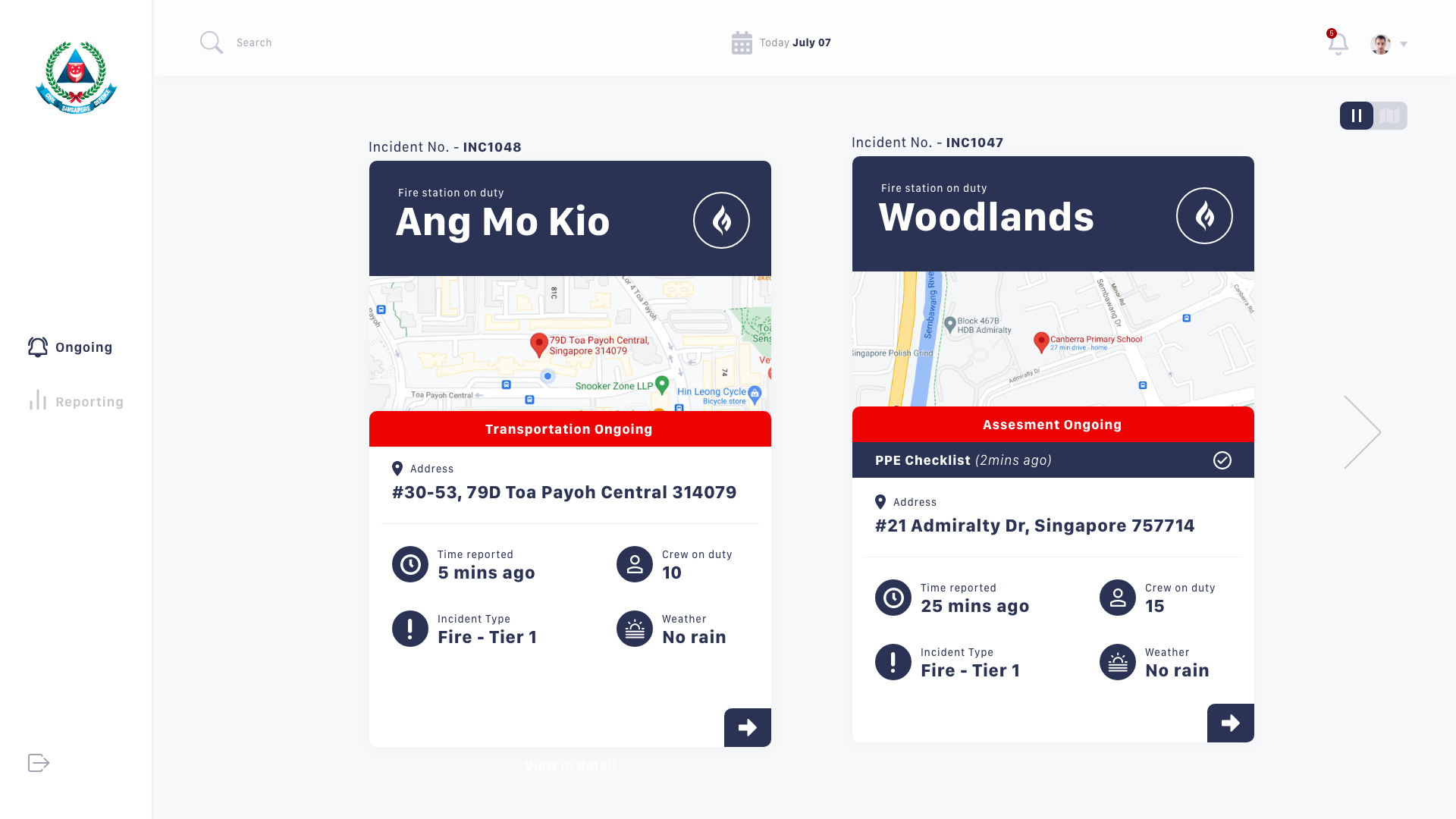
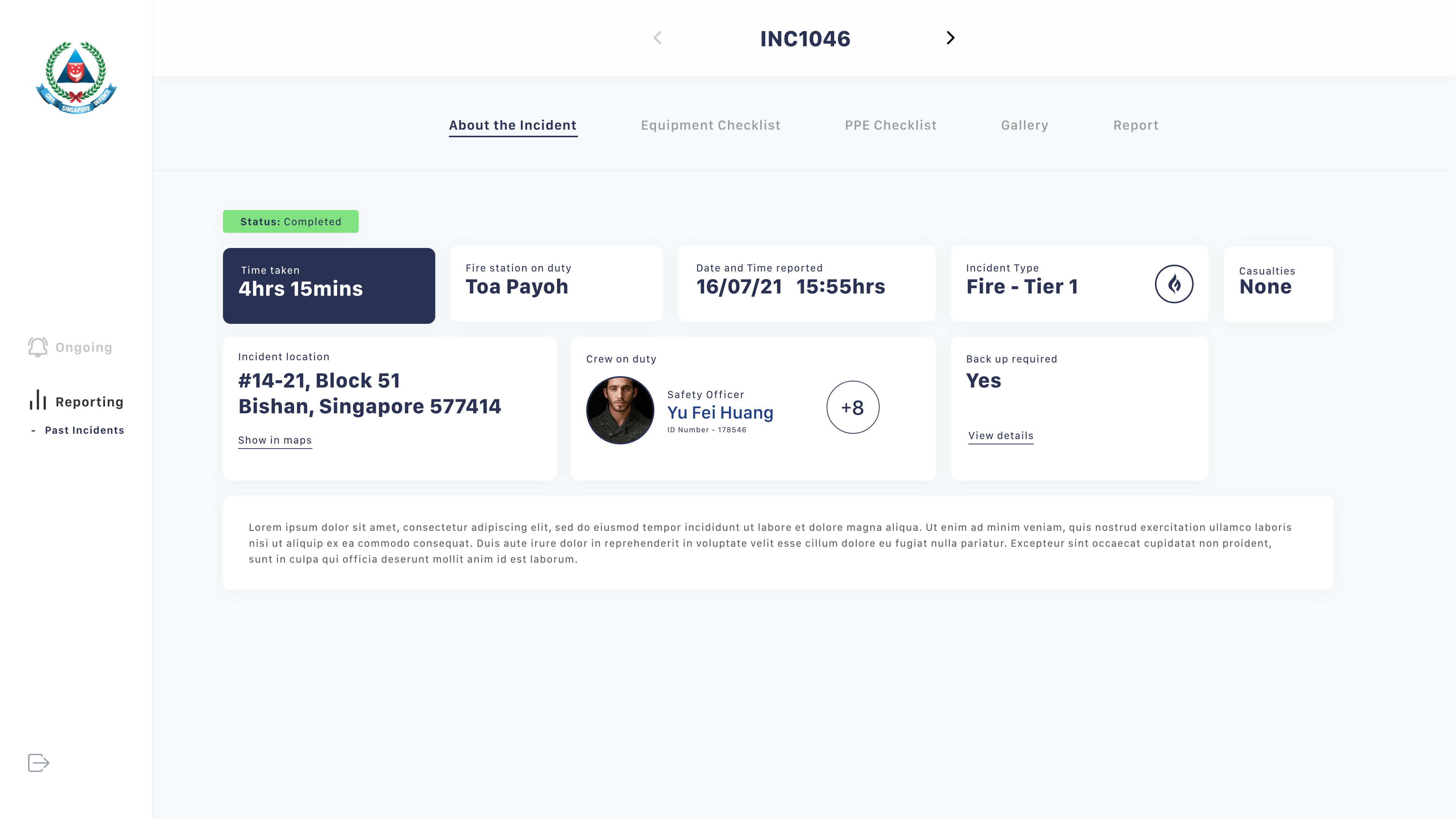
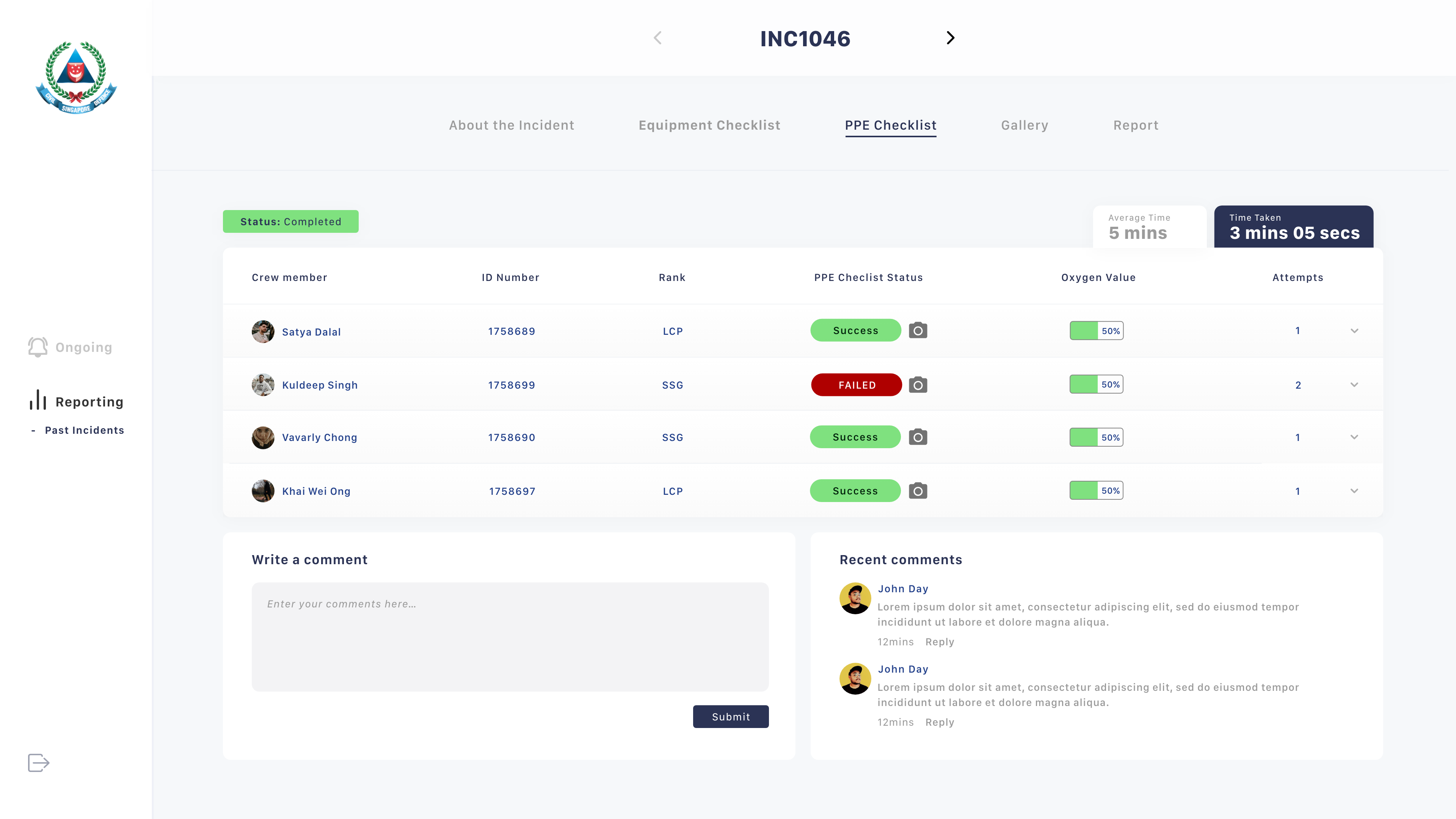
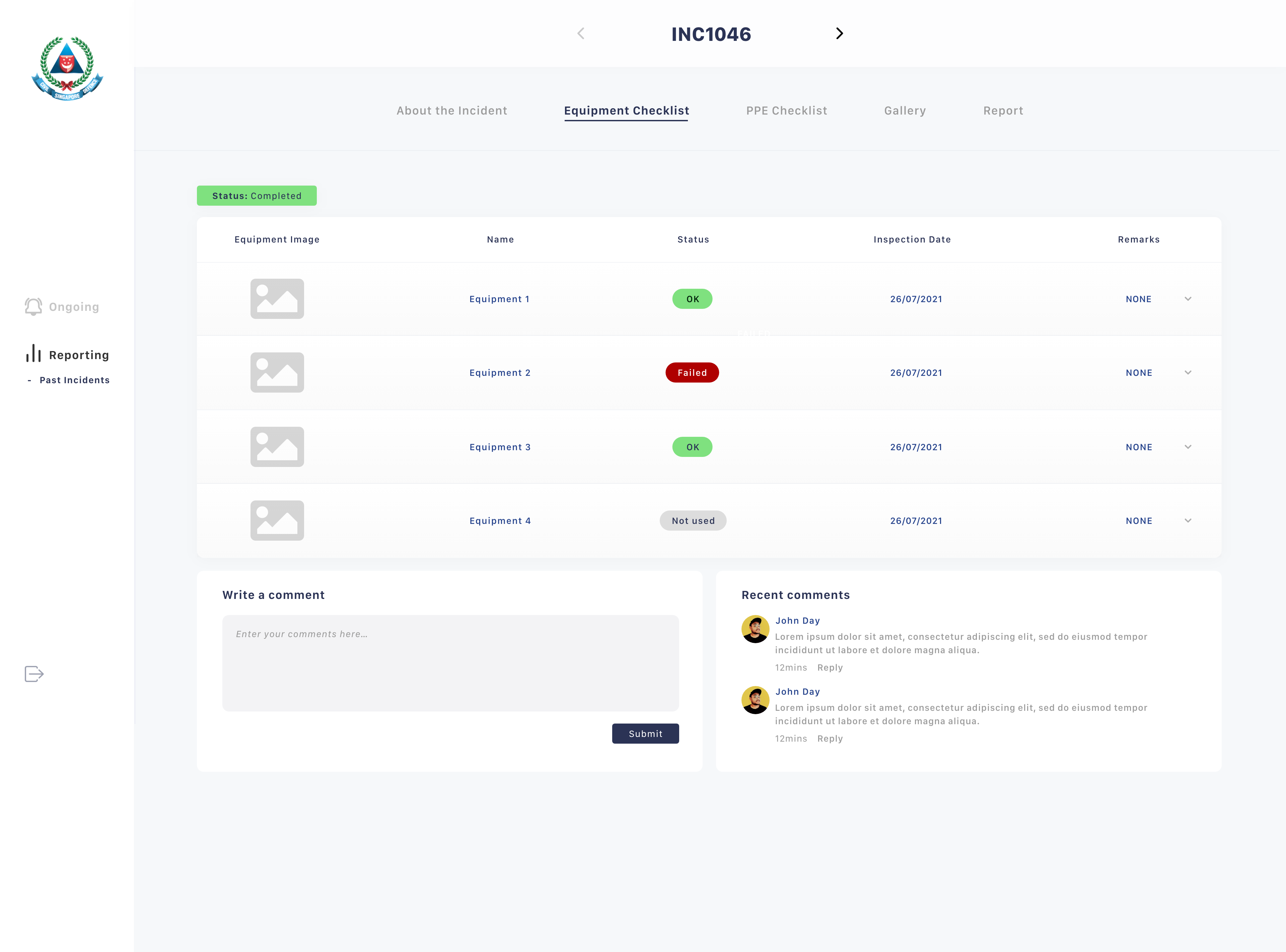
Centralised information in a single page view for the Command Centre, with documentation stored electronically alongside photo evidence and an activity log.
Outcome
End-to-end visibility, evidence-based verification on hand for Fire CC and Operations, and far less paperwork to chase down later.
Pain points
Inspection and validation depended on manual checks from a single Safety Officer.
Future state
Two layers of PPE inspection: an automated check, followed by manual and final inspection overall.
Outcome
Better accuracy with an added control layer, and less reliance on any one Safety Officer.
Current process
Highly manual, prone to human error, hard to scale for larger events, and prone to data overload. A firefighter gears up, a BA Officer takes 1–3 minutes to inspect them, records everything on a board by hand, and only then is the Command Centre notified, sometimes after inspection, sometimes only during the rescue mission itself.
Proposed process
Automated, error-resistant, and built to scale. A BA Officer runs the digitised PPE check on a tablet, part automated, part manual, and logs it straight to the real-time dashboard. The Command Centre stays informed throughout the entire journey, with every critical detail in one page view.